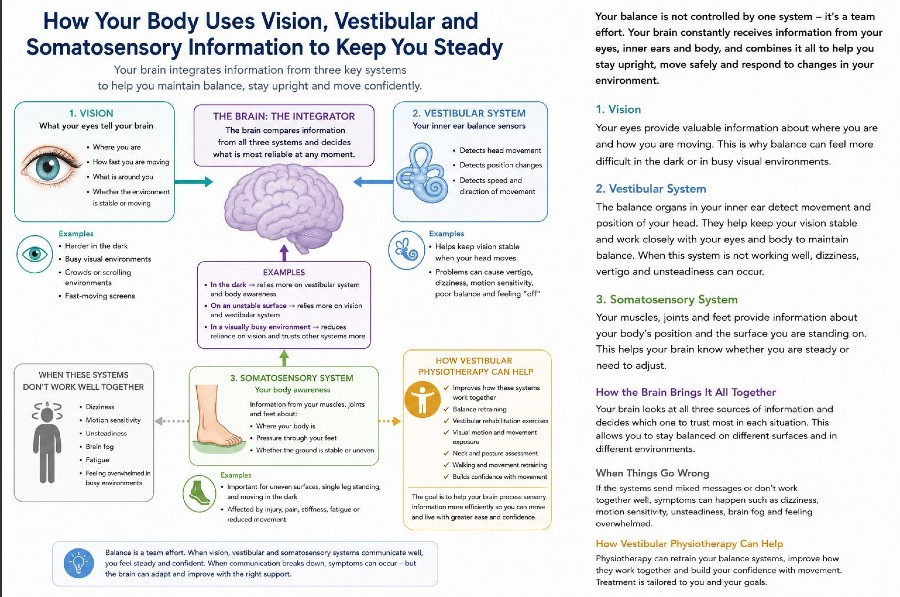
The diagram was created using AI with information given to it by us.
Balance is something most of us take for granted – until it stops working properly. Feeling dizzy, unsteady, motion sensitive or overwhelmed in busy environments can happen when the brain is struggling to process information from the body’s balance systems efficiently.
The diagram below shows the three main systems your brain uses to keep you steady:
- Vision – what your eyes see around you
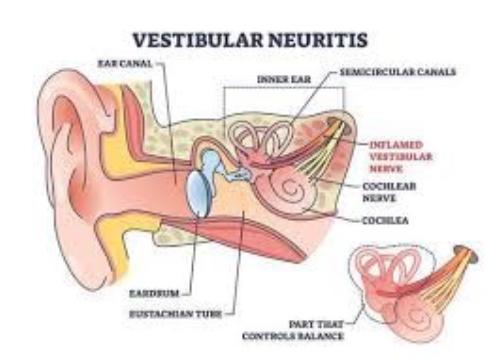
- Vestibular system – the balance organs in your inner ears
- Somatosensory system – information from your muscles, joints and feet about where your body is in space
Your brain constantly combines information from all three systems to help you move confidently and stay upright.
Why These Systems Matter
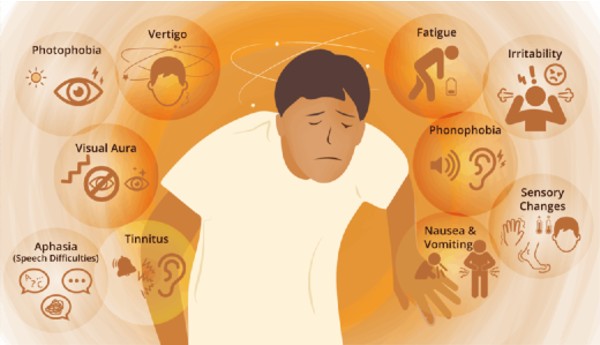
These systems are always communicating with each other. If one system is not working properly, the brain may begin relying too heavily on another system. This can lead to symptoms such as:
- Dizziness
- Motion sensitivity
- Feeling “off” or disconnected
- Unsteadiness
- Brain fog
- Difficulty in busy visual environments
- Reduced confidence with movement
For example, some people become very visually dependent after a vestibular problem. Busy supermarkets, scrolling on screens or crowds may then trigger symptoms because the brain is overusing visual information for balance.
The Brain Can Adapt
The positive news is that the brain is adaptable. Through vestibular physiotherapy and targeted rehabilitation exercises, the brain can learn to process sensory information more efficiently again.
Treatment may involve:
- Balance retraining
- Vestibular exercises
- Gradual exposure to movement or visual environments
- Improving body awareness and movement confidence
- Addressing neck stiffness or movement patterns
Recovery is not always about “switching symptoms off” instantly. Often, it is about helping the system become more organised, efficient and less sensitive over time.
Everyone’s Balance System Is Different
No two people experience dizziness or balance problems in exactly the same way. A thorough assessment helps identify which systems may not be working together well and guides an individual treatment plan.
Understanding how these systems interact is often the first step toward improving confidence, movement and quality of life